 piledrivegames.
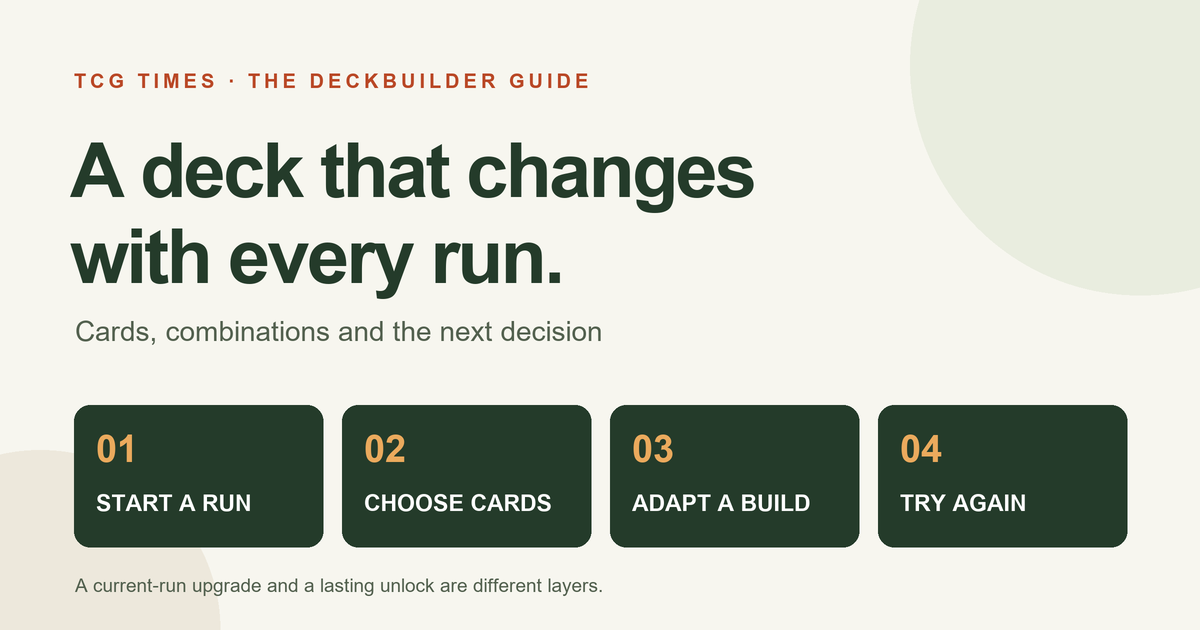
A roguelike deckbuilder combines card choices with repeatable runs. You assemble and adapt a deck during an attempt, use it against a changing sequence of challenges, and start another attempt when that run ends. The appeal is working out what to build from the options you actually receive.
That leaves plenty of room for different games. Slay the Spire sends a character through battles and branching paths. Monster Train adds units and positioning across several floors. Balatro uses poker hands and score targets. Looking at those differences helps you understand what the label means when browsing indie games on Steam.
What happens during a roguelike deckbuilder run?
A useful way to read the format is as a series of linked decisions:
- Begin with a starting setup. This might include a character, a starting deck or another choice that shapes your available options.
- Face a challenge. Use the current build to win a fight, reach a score or meet the game's next objective.
- Choose how to change the build. Rewards, shops or events may offer cards, upgrades, items or other ways to alter your plan.
- Adapt to the next challenge. Decide what the build needs now, while keeping later encounters in mind.
- Finish the attempt and try another. A later run can present a different combination of options. What carries over depends on the game.
This is a common pattern rather than a fixed checklist. Mega Crit's Slay the Spire description gives a concrete example: each ascent offers different paths, enemies, card choices and relics. You are building for the situation that unfolds during that attempt.
When do you build the deck?
Card games can ask you to make deck decisions at different times. A deck assembled before a match gives you a plan to bring into battle. A deck assembled during a run asks you to develop that plan as new options appear. Some games combine both approaches.
| Decision | Before a match | During a run |
|---|---|---|
| Choosing cards | Select a starting list from the options available to you. | Respond to rewards, shops or events as the attempt develops. |
| Combining cards | Prepare interactions you expect to use together. | Build around the combinations you discover and can support. |
| Answering a weakness | Revise the list before another match. | Use the remaining opportunities to improve the current attempt. |
These describe design approaches. They do not establish that every game with cards uses a run structure, or that every run-based game handles rewards in the same way.
Three examples show how much the format can vary
Slay the Spire: cards, routes and relics
In the original Slay the Spire, card selection and route choice develop together. Its developer listing describes adding cards during each ascent and finding relics whose effects interact with the deck. That makes a new reward a question about the build you already have: what does it help you do, and what does it need in return?
Monster Train: deck choices meet floor placement
The original Monster Train spreads battles over three vertical floors, with surviving enemies moving upward toward the Pyre. Its Steam description explains route choices that recruit units, upgrade or duplicate cards, and add passive benefits. Your primary and supporting clans shape the card pool.
This illustrates another layer to inspect: where and when you use a card can matter alongside the card's own effect. Watching one complete turn can tell you more about that relationship than a quick look at a card collection.
Balatro: build toward a score
Balatro uses poker hands to earn chips and beat blinds. Its official FAQ explains how Jokers affect the build and how Tarot cards can modify playing cards. The decisions support a scoring system, showing that this genre does not require a hero attacking monsters.
A useful card is one your current build can use
A card can look strong in isolation and still be awkward in a particular deck. Before adding it, ask three questions:
- What problem does it solve? It might provide defense, damage, resource generation or a scoring interaction. Identify the job it will actually do.
- Can you use it at the right time? A powerful effect is less helpful if its cost or conditions regularly put it out of reach.
- What supports it? Look at the rest of the deck and the items already affecting your run, rather than assuming a missing combination will arrive later.
Deck size is part of that decision. For a simple illustration, imagine a shuffled ten-card deck containing two cards you want. Drawing one card uniformly at random gives a 2-in-10 chance of finding one of them: 20%. Add five unrelated cards, with nothing else changing, and that single draw becomes 2-in-15, or about 13.3%.
This is a toy calculation, not a prediction for a particular game. Extra draws, upgrades, additional copies and other rules change the situation. It explains why adding a card has an opportunity cost: you are changing the collection of cards future draws come from. When a game allows you to decline a reward, consider whether taking it improves the current plan.
Runs and long-term progression are different layers
Keep two questions separate: what happens to this attempt's build, and what becomes available for future attempts?
Monster Train's Steam page describes clan levels that unlock more cards. Balatro's FAQ describes unlockable Jokers and decks. These are examples of opening future options; they do not mean that an upgraded deck is automatically carried intact into the next run.
Even the word permanent needs context. Balatro's Steam description specifies that Voucher bonuses apply for the current run. A lasting effect inside an attempt and a permanent unlock across attempts are different systems.
For a specific example of the distinction, LocalThunk's developer-marked reply explains that starting a new Balatro run ends the current one, while earned unlocks appear when the next run loads. Check each game's own rules before assuming that it handles progress the same way.
What to check on a Steam page before choosing a game
Use a genre label as an introduction, then look for the actual decisions. Valve explains that developers, players and moderators can apply Steam tags. Our advice is to combine those tags with the developer's description and footage of ordinary play.
- Find the main challenge. Are you managing battles, arranging units, beating a score or doing something else?
- Find the opportunities to alter the deck. Look for reward selection, shops, upgrades, removal or other systems the game actually offers.
- Check run and save rules. If you need to stop mid-session, verify how saving and resuming work. A run-based structure alone does not answer that question.
- Check what persists. Distinguish a current-run effect from unlocked starting options, difficulty levels or other longer-term progress.
If a developer offers a demo, our Steam demo discovery guide suggests ways to make a short session useful. Focus on whether you enjoy choosing and adapting a build, rather than judging the entire game from one fortunate reward.
Deckbuilding can also lead into real-time strategy
Our own Pixel Rush: RTS provides a related example of preparing a deck before battle. Its Steam description connects that deck to summoning monsters, evolving them and casting spells during real-time matches. Piledrivegames develops Pixel Rush and publishes TCG Times, so this is a disclosed design example, not an independent review or a roguelike recommendation.
The useful question is when a game asks you to build a plan, and how it lets you change that plan. For roguelike deckbuilders, much of that pleasure comes from adapting during the run and taking what you learned into another attempt.