 piledrivegames.
RTS stands for real-time strategy. In an RTS game, you make strategic decisions while the game world keeps moving. You might spend resources, direct an army, defend a position or prepare an upgrade while an opponent is making their own moves. You usually do not wait for a separate turn before acting again.
That describes the clock, but it does not tell you everything about the game. One RTS might ask you to manage a growing settlement and a large army. Another might concentrate on a small battlefield or combine real-time combat with cards. Understanding those differences makes it easier to choose an indie strategy game on Steam that suits how you like to play.
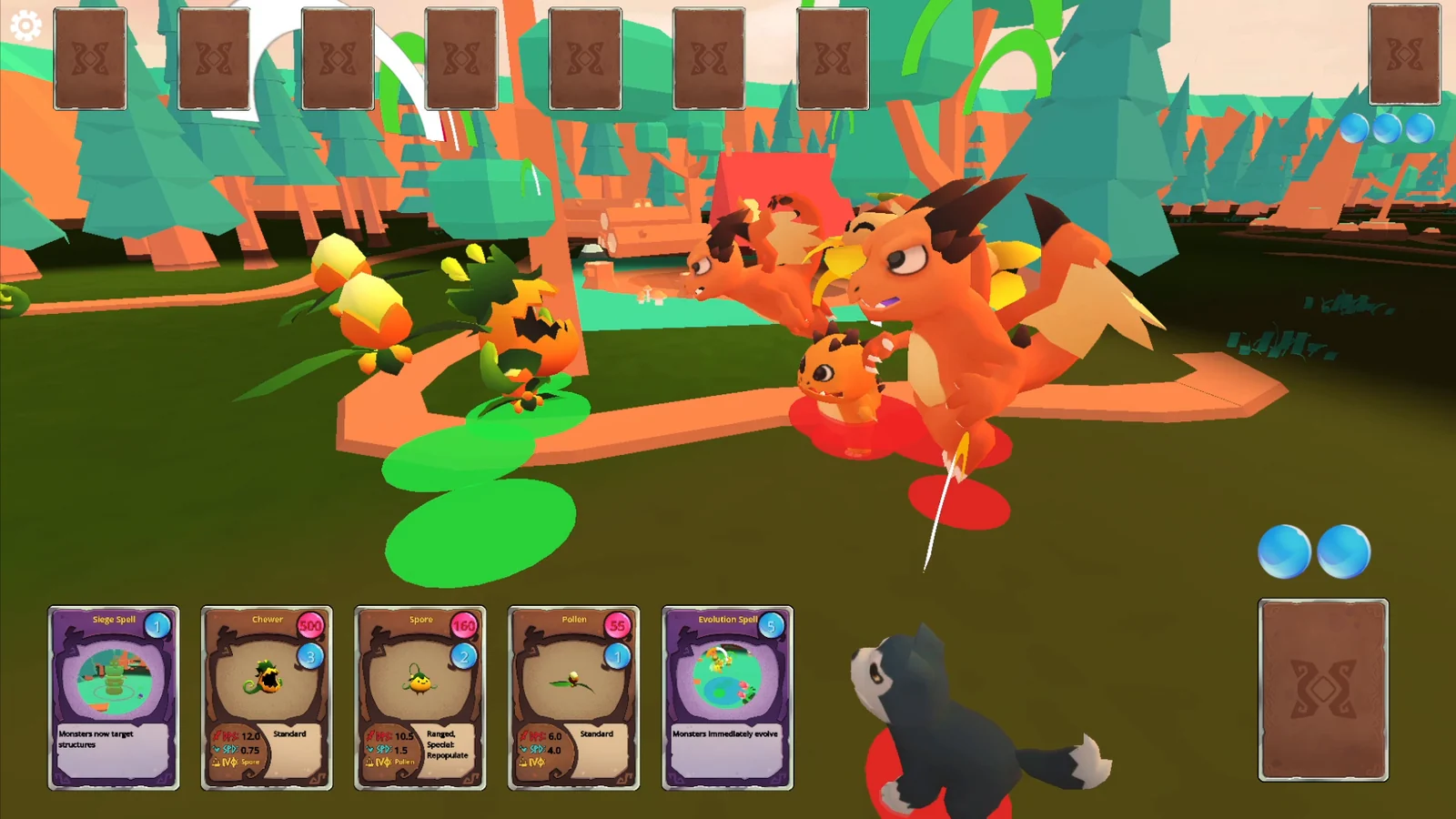
Header image: a battle in Pixel Rush: RTS, an in-development game made by Piledrivegames, the publisher of TCG Times.
What makes a game real-time strategy?
The defining tension is having to decide what matters while other things continue happening. If you spend your resources on another unit now, you may have less available for an upgrade. If you send your army across the map, another position may become vulnerable before it returns.
A traditional example is Age of Empires II: Definitive Edition. Its official beginner guide describes developing an economy, researching technologies and training military units while the world advances around you. That combination of economic planning and army control is a useful introduction to the genre, though individual RTS games can simplify or replace parts of it.
RTS vs turn-based strategy
The most useful difference to look for is when the game lets you act and when the situation changes.
| Format | What to expect |
|---|---|
| Real-time strategy | The battlefield continues developing as you make decisions and issue orders. |
| Turn-based strategy | Actions are organized into turns, often giving you a defined opportunity to plan before the next turn resolves. |
| Real-time with pause | Play normally advances continuously, with a pause system. Whether you can issue orders while paused depends on the game and mode. |
For a concrete contrast, Subset Games describes Into the Breach as a turn-based strategy game with enemy attacks shown in advance. Working out how to answer those attacks is a different kind of pressure from reacting while units are already moving.
A top-down camera, a grid or an army does not settle the question by itself. Read the description and watch the interface during gameplay: does the action wait for the player, or carry on while they think?
The decisions behind the battles
RTS discussions often use a few terms that are easier to understand through the decisions they describe:
- Economy: how you obtain and spend the resources that support your plan. Investing in future income can mean having less strength immediately.
- Map control: which areas you can reach, defend or deny to an opponent. An important location might provide resources, a route forward or an objective.
- Macro: the larger plan, such as production, expansion and how to spend your overall budget.
- Micro: attention to individual units or a particular encounter, such as moving a threatened unit or choosing a target.
These are useful lenses rather than a checklist every game must follow. In Age of Empires II, for example, the official controls and resources guide connects resource stockpiles, unit orders and the minimap. In a smaller RTS, the central resource might instead be a single energy meter, and some unit behaviour may be automatic.
When watching a trailer, try following one decision instead of the biggest explosion. What did the player spend? What did that purchase let them do? What did they give up by choosing it? Those questions reveal more about the strategy than the number of soldiers on screen.
Indie RTS games can change the scale and controls
The letters RTS do not mean that every game requires the same controls, match length or competitive commitment. The official site for Tooth and Tail describes an indie RTS with base building and army leadership, support for controller or keyboard and mouse, and matches designed around five to twelve minutes. It is an example of how the genre can fit a compact format, rather than a promise about the length of other RTS games.
Our own Pixel Rush: RTS explores a different combination: deck construction before battle, followed by real-time decisions about summoning monsters, evolving them and casting spells. The Steam description explains that combination. We develop the game, so this is an example of a design approach, not an independent review or a claim that it is the best starting point for everyone.
Deckbuilding describes how your available options are assembled. It does not, by itself, tell you whether battles use turns. Likewise, an RTS label alone does not establish whether a game has base building, direct control of every unit or a particular multiplayer mode.
What to check before choosing an RTS on Steam
Steam tags are useful starting points. Valve explains that developers, players and moderators can apply tags, and that tags help users filter searches. Our advice is to combine those labels with the written feature list and gameplay footage, especially when a game mixes several genres.
- Find the mode you actually want. Look for a campaign, single-player skirmish, cooperative play or competitive matches. Check the listed modes rather than assuming an RTS includes all of them.
- Check the learning tools. Look for a tutorial, practice opponents and difficulty options. If the page does not explain them, check the developer's documentation or ask before buying.
- Check control and pacing options. If pausing, speed adjustment, controller support or remapping matters to you, confirm it explicitly. A pause option may work differently in solo and online modes.
- Match sessions to your available time. Find out whether you can save during a mission and whether progress depends on finishing a match. A short trailer cannot answer either question.
- Separate current features from plans. Read what is playable now and what is still in development. A store page for an upcoming game describes a different purchase or wishlist decision from an already released game.
A manageable way to learn your first RTS
Start with the tutorial or a forgiving solo scenario, if one is available. Give yourself one thing to learn: how to select units, how the main resource works or what wins the mission. Add another system once that first action feels familiar.
During a practice match, make a small plan you can explain. Perhaps you will defend one route while saving for an upgrade. After the match, ask where that plan stopped working: did you miss an attack, spend too much too early or misunderstand the objective? Change one decision for the next attempt.
If you are comparing games, write down the kind of decision you enjoyed. You may prefer managing an economy, controlling a small force or combining cards under time pressure. Use that preference to narrow your next search, rather than treating every game with an RTS tag as the same experience.